Doña Elvira
The Constant PrincessDoña Elvira is Catalina’s Spanish duenna and one of the people closest to her during her first years in England. She guards the princess’s privacy, preserves familiar customs within an alien court, and becomes the crucial witness through whom Catalina’s claim about her marriage to Arthur, Prince of Wales, reaches the Spanish diplomatic channel. Her service helps Catalina pursue a future as queen, but it is not a lasting alliance: years later, Catalina dismisses her after discovering that she is plotting against Catalina’s father in favor of Juana of Castile and Philip of Habsburg.
Household guardian and keeper of Spanish custom
When Henry VII of England arrives demanding access to Catalina, Doña Elvira refuses to treat his rank as a reason to abandon the princess’s declared seclusion. She explains that Catalina has already told the king she cannot receive him, and that Spanish noblemen have ridden out to explain the protocol. When Henry presses her, she insists that she takes her orders from the Queen of Spain, who charged her to ensure that the Infanta receives proper respect. Her resistance is a defense of Catalina’s privacy and of the authority of the household entrusted with her care, even when the person challenging that authority is the king himself.
Doña Elvira’s protection is practical as well as ceremonial. She maintains the standards Catalina has brought from Spain in a court where hot water must be laboriously heated and carried. For one bath, she arranges for a large kitchen vessel to be scoured, lined with linen, and filled with hot water; servants repeatedly bring more to keep it warm. She supervises the preparation and washing, treating such care not as an indulgence but as part of the dignity owed to an Infanta. The scene makes her a custodian of familiar habits as well as a chaperone: she tries to keep Catalina’s former life present through the routines of her new household.
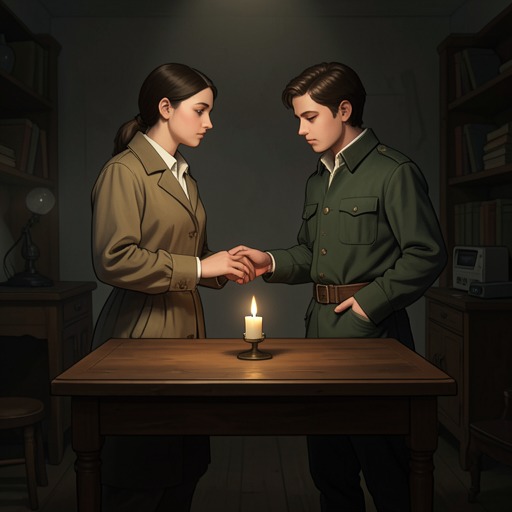
Her authority has limits. When Arthur comes to Catalina’s room at night, Doña Elvira admits him, though her rigid expression and disapproving manner make her reservations plain. She manages access rather than deciding the princess’s marriage or private conduct. The episode shows her operating within the expectations placed on a duenna: present at the threshold, responsible for propriety, but unable to control the larger dynastic arrangements around Catalina.
Witness to Catalina’s claim
After Arthur’s death, the appointment of Harry Tudor as Prince of Wales makes Catalina feel that another link to her past is being severed. Doña Elvira expects her to break down, but Catalina instead sends the maids away and asks her to write to her parents asserting that the marriage to Arthur was not consummated and that she remains a virgin. Doña Elvira is stunned. She points out that the marriage was publicly bedded, but Catalina answers that no one can know what happened in private and insists that Arthur was impotent.
Doña Elvira’s role is more than that of a recipient of a confidence. Catalina says that others will believe her because Doña Elvira is close to her, almost like a mother, and insists that Doña Elvira must speak on her behalf. Catalina also makes the consequences of refusal clear: silence or contradiction could be taken as proof that the duenna had neglected her interests, damage her standing, and end her prospects of service in a royal court. Under this pressure, Doña Elvira agrees to repeat the account Catalina wants advanced. Her position turns a private assertion into a report that can circulate among parents, ambassadors, and negotiators.
The claim has an explicit dynastic purpose. Catalina argues that if her first marriage was never consummated, she can marry Arthur’s brother, Harry Tudor. She directs Doña Elvira to tell the next emissary from Spain that she wishes to be Princess of Wales again and that negotiations should concern a new wedding rather than her widow’s provision. Doña Elvira initially asks how the claim will make Catalina queen, but Catalina presents the marriage to Harry as the route back to the position she believes she was meant to hold. The duenna’s cooperation therefore supports a strategy whose personal, legal, and succession consequences extend far beyond their household.
Diplomatic use and the limits of the evidence
The marriage claim also encounters the legal obstacle of affinity: a proposed marriage to a deceased brother’s widow requires a dispensation. Catalina says she will apply for one and asks whether the marriage to Arthur was in fact unconsummated. In a later exchange, Dr. de Puebla confirms the assertion on Catalina’s word. The available account does not establish that Doña Elvira gives evidence in a formal hearing; it shows her agreeing to serve as a witness for the claim and helping place it before the Spanish side of the negotiations. Her testimony is thus part of the story’s chain of assurance, not an independent adjudication of what happened between the spouses.
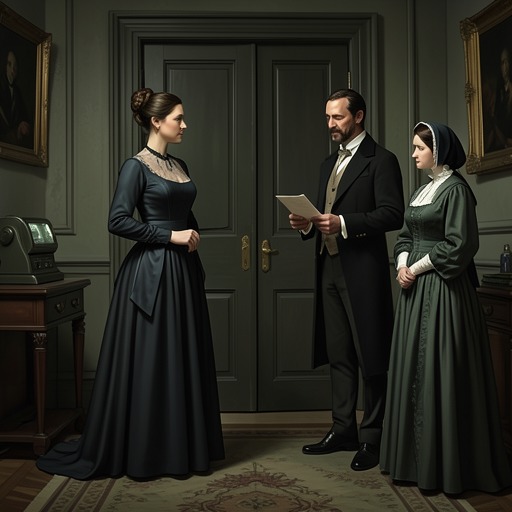
When Henry VII proposes marriage to Catalina himself, Doña Elvira is again the person to whom Catalina speaks privately. She asks what the king wanted, and Catalina bluntly tells her that he proposed to marry her. Doña Elvira worries about what Catalina’s mother will think and admits that she should not have left Catalina alone with the king. Catalina instructs her not to leave them alone again unless she signals her to do so. The exchange reveals their intimacy and their unequal positions: Doña Elvira can advise and regulate access, but Catalina increasingly claims the right to decide how events will proceed. She rejects reliance on an ambassador or even on her mother’s decision, declaring that she must make the marriage happen herself.
The claim about Arthur’s marriage remains consequential long after these conversations. At the later court proceedings over her marriage to Henry, Catalina enters the courtroom prepared to stand by the account and to stake her case on Henry’s reluctance to contradict her publicly. Doña Elvira is not shown participating in that hearing. Her earlier agreement nevertheless belongs to the history of how Catalina’s version became a diplomatic and dynastic position that could be maintained over time.
Estrangement and narrative significance
The relationship breaks during Catalina’s long wait for marriage to Harry. She discovers that Doña Elvira is plotting against her father, Ferdinand of Aragon, in favor of Juana and her husband, Philip. Catalina dismisses her in anger, unwilling to ally with her sister against her father. She says she does not care if Doña Elvira speaks against her or calls her a liar, and she judges that no one will believe the duenna’s word against her own. Doña Elvira leaves for the Netherlands to join Philip and Juana; Catalina never hears from her again and does not complain of losing her.
That dismissal revises the meaning of Doña Elvira’s earlier loyalty. She had protected Catalina from unwanted access, preserved her customs, and risked her own courtly standing to carry a disputed marriage claim. Yet closeness did not guarantee political allegiance. Catalina could rely on her as a witness while their interests aligned, but once she judged Doña Elvira’s conduct treasonous, she severed the bond. The contrast is sharpened by Catalina’s later recollection that losing Dr. de Puebla cost her a friend and ally: she regrets his absence, but records no comparable grief for Doña Elvira.
Doña Elvira’s part in the story shows how a royal woman’s household could serve as both a refuge and a political instrument. Caretaking, access to the princess, and credibility with diplomats give the duenna influence, but not independence from the rival loyalties surrounding a dynastic marriage. Her presence helps Catalina turn a private assertion into a public strategy; her departure marks the point at which personal trust yields to political judgment.